By Luke Murray
When people ask what they can do about home energy and climate, the big picture is only half the story. Luke Murray’s Climate Emergency Forum article, “Smart Homes in a Heating World: How Much Do Our Houses Really Matter?” explains why building efficiency, electrification, and justice matter; this guide focuses on the practical side—how to turn those ideas into a concrete upgrade plan for your own home.
Design your home like a system, not a series of gadgets. Begin with efficiency upgrades (insulation, windows, solar orientation), layer in renewable energy or efficient appliances, and let smart tech manage the rest. The result: a home that runs cleaner, costs less to operate, and works intuitively around your habits.
The CEF article makes the case for “start with the building, not the gadgets.” This section turns that principle into a simple checklist you can act on.
Treat this shell work as your “Stage 0”: most later smart‑tech and electrification investments perform better and last longer if the envelope is already tuned.
In the CEF piece, smart tech is framed as supportive—not a substitute for efficiency or fossil‑fuel phase‑out. Here are the specific tools that make that support automatic day to day.
When connected through a central hub, these tools turn your home into an intelligent energy ecosystem that quietly enforces the efficiency and electrification choices you’ve already made.
Space heating often dominates emissions, but hot water and outdoor use are usually next in line. This is where “smart” and “efficient” overlap in very practical ways.
Quick‑Action List for Water Efficiency:
Water‑smart homes conserve a vital resource and lower utility bills, especially in drought‑prone regions that are already on the front lines of climate change.
If you only have the budget or bandwidth for a few moves at a time, sequence matters. The matrix below is designed as a practical companion to the CEF article: follow it to avoid flashy but low‑impact upgrades.
| Step | Focus Area | Homeowner Action |
|---|---|---|
| 1 | Energy Audit | Identify leaks, drafts, and inefficient systems. |
| 2 | Insulation & Windows | Upgrade to modern materials with higher R‑values. |
| 3 | Smart Systems | Integrate thermostats, lighting, and appliances. |
| 4 | Efficient Lighting | Replace old bulbs with LEDs or motion‑sensing fixtures. |
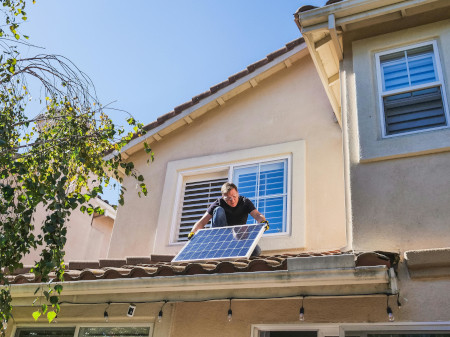
| 5 | Renewable Energy | Add solar panels or connect to a green energy supplier. |
| 6 | Appliance Upgrade | Choose certified efficient models. |
| 7 | Continuous Monitoring | Use smart dashboards to track performance. |
This structure keeps projects manageable and makes sure each “smart” purchase actually reduces your footprint rather than just adding another gadget.
Modern high‑efficiency appliances do more than save power; they change how work gets done in the home.
Because these systems pack in advanced components, repairs can be costly. Home warranties and similar service plans help cover failures from normal wear and tear, sometimes including smart or high‑efficiency add‑ons, which can be a pragmatic way to de‑risk electrification in older homes.
Lighting and HVAC together are often responsible for more than half a home’s energy use; control is where “smart” really earns its name.
An eco‑friendly smart home is also about materials and habits, not just electronics.* Reclaimed wood, vintage fixtures, and repurposed furniture reduce demand for new materials while adding character.
For larger projects, programs like LEED for Homes translate professional green‑building standards into residential checklists. They provide criteria for:
An eco‑friendly smart home doesn’t rely on complexity; it thrives on connection between design, technology, and intention. Used alongside “Smart Homes in a Heating World: How Much Do Our Houses Really Matter?” on Climate Emergency Forum, this guide is meant as the “how‑to” counterpart: a way to translate big‑picture climate and justice goals into specific projects at your address.By pairing sustainable materials with intelligent systems and mindful habits, households can build spaces that live more lightly on the planet while improving comfort and resilience in a rapidly heating world.

We are all very passionate about the climate emergency and the dramatic loss of biological diversity on Earth . . . Learn about us



Copyright ©
Climate Emergency Forum