By Luke Murray
When people ask what they can do about the climate crisis, home energy is usually near the top of the list. Efficient, all‑electric homes powered by renewables really can cut emissions, reduce bills, and improve comfort. But on a planet already in a climate emergency, it matters how these choices are framed, who can access them, and how far they actually move the dial.
Globally, buildings are responsible for a significant share of energy‑related greenhouse gas emissions, mostly from burning fossil fuels for heating, cooling, and hot water and from the electricity used to power everything inside. Cutting this demand, and shifting what remains to clean, renewable power, is one of the clearest pathways households have to support a rapid fossil‑fuel phase‑out.
Yet these opportunities are distributed very unevenly. High‑income households in the Global North typically have much larger per‑capita footprints and far more access to retrofits, rooftop solar, and financing than low‑income families, renters, or communities in the Global South. Any honest conversation about “eco‑friendly smart homes” has to start with that reality.
Before thinking about apps, sensors, or “smart” features, the building itself matters most. A leaky, poorly-insulated home that loses heat through the roof and walls will waste energy no matter how advanced the thermostat is.
Key first steps for most homes include:
These measures are usually invisible, but they reduce the amount of energy needed in the first place. Every kilowatt‑hour or cubic metre of gas avoided is a lasting emission reduction, especially when multiplied across millions of homes.
Once the building shell is tighter, the next big question is: what fuels the home? In many countries, space and water heating are still dominated by oil, propane, or gas, and cooking with gas is common. These systems lock households into fossil fuels and, in the case of gas, add indoor air‑quality concerns on top of climate impacts.
Moving toward a climate‑aligned home usually means:
These changes are more than lifestyle upgrades. They are concrete steps away from fossil‑fuel dependence, especially when paired with policies that decarbonize the grid.
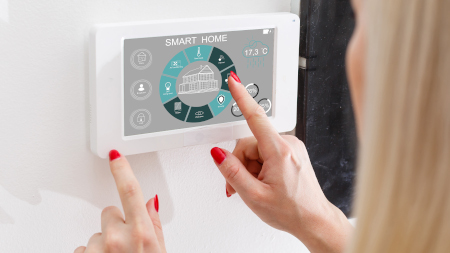
Smart thermostats, connected lighting, and home energy monitors can make it easier to run an efficient home day to day. A well‑configured thermostat can reduce wasted heating and cooling, occupancy sensors can shut lights off automatically, and live energy dashboards can reveal which devices are silently drawing power.
Used well, these tools can support:
But smart tech is not a substitute for basic building upgrades or for phasing out fossil fuels. A gas furnace controlled by an app is still a gas furnace. A “connected” home that adds more screens, devices, and servers can even raise overall electricity use if there is no attention to demand reduction.
For homeowners with good credit, access to contractors, and supportive policies, retrofits and smart systems can be realistic. For many others, they are not. Renters usually cannot decide to replace the heating system, re‑insulate the walls, or add rooftop solar. Low‑income households often live in the least efficient, most poorly maintained housing, and face energy burdens that are already too high.
A climate‑honest approach to home energy therefore has to ask:
Solutions exist—publicly funded retrofit programmes, social housing improvements, community‑owned solar, and protections against rent hikes after upgrades—but they depend on policy and political will, not just consumer choice.
Within these larger structural limits, there are still practical actions many households can take, especially when paired with advocacy for fairer policies:
For renters, options are more constrained but not nonexistent: plug‑in efficiency measures, portable induction hobs, draft‑proofing, and, importantly, organizing with neighbours to push landlords and local governments toward building upgrades and fair energy policies.
Greener, smarter homes are not a distraction from the climate emergency; they are one visible piece of a broader transformation that has to happen across power, transport, industry, and land use. But they are only meaningful as climate solutions when they genuinely reduce fossil‑fuel use, are accessible beyond the wealthy, and are backed by policies that scale them up quickly and fairly.
Thinking of the home as a system—building envelope, heating and cooling, appliances, controls, and the source of electricity—helps keep the focus where it belongs—on cutting real‑world emissions, improving health and comfort, and making sure the benefits reach those who need them most.

We are all very passionate about the climate emergency and the dramatic loss of biological diversity on Earth . . . Learn about us



Copyright ©
Climate Emergency Forum